

Baby neck swimming rings have grown in popularity as more parents explore early water-based activities for infants. These inflatable rings support a baby’s head while the body floats freely in water, offering a buoyant and relaxing environment for movement. While many parents appreciate the freedom of motion and sensory engagement these rings provide, safety concerns have also become part of the public discussion. Understanding how these products function, what risks exist, and how proper usage affects safety allows families to make informed decisions. High-quality designs—such as Lixin baby neck swimming rings—focus on stability, comfort, and secure buoyancy to help minimize avoidable risks.
1. How Baby Neck Swimming Rings Are Intended to Work
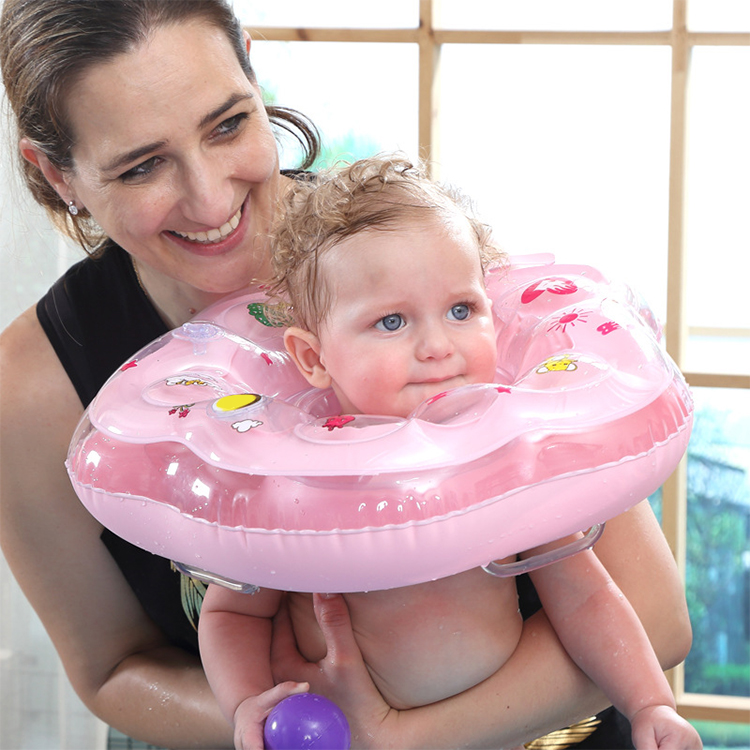
The purpose of a baby neck swimming ring is to support an infant’s head above the water while allowing the rest of the body to float naturally. The ring gently wraps around the neck using soft materials, smooth edges, and secure fasteners. When properly fitted, the buoyancy lifts the head without placing pressure on sensitive areas. This creates an environment where babies can kick, stretch, and move freely in shallow pools or bathtubs.
The experience is meant to provide gentle physical stimulation. Babies can explore natural body movements with reduced gravitational resistance, which may encourage early muscle engagement. A well-designed ring distributes support evenly so the baby remains upright and stable. Products like Lixin baby neck swimming rings are engineered with ergonomic contours and anti-chafe surfaces to maintain comfort while preventing accidental slipping.
2. Understanding Safety Considerations and Potential Risks
Although these rings are designed for safety, risks can arise if the product is poorly constructed or if an infant is left unsupervised. The ring must maintain airtight inflation to ensure buoyancy. If any leak occurs, the support decreases rapidly, affecting stability. Another consideration is the neck fit; a ring that is too loose may shift, while one that is too tight may cause discomfort.
Safety concerns typically revolve around:
- Improper inflation, which reduces flotation stability
- Incorrect sizing, affecting the way the baby’s chin and jaw rest on the ring
- Low-quality seams, which may weaken under pressure
- Lack of supervision, the most significant risk factor in any water activity
- Using the ring in deep water, which increases the chance of tipping
While these factors deserve attention, most risks originate from improper usage rather than the product concept itself. High-quality models—especially those built with multi-chamber buoyancy and durable seams like Lixin baby neck swimming rings—are developed to minimize failure points and improve float stability even under frequent use.
3. Structural Design Features That Influence Safety
The engineering behind a baby neck swimming ring determines whether it performs reliably in water. Good design focuses on distributing buoyancy evenly around the ring so the baby remains in a neutral, stable position. The materials must be soft yet strong enough to maintain airtightness, and the inner edge must avoid sharp curves that could irritate the neck.
Several structural features contribute to overall safety:
| Feature | Safety Impact |
|---|---|
| Dual-air-chamber design | Provides backup buoyancy if one chamber deflates |
| Smooth inner contouring | Prevents chafing and maintains comfortable support |
| Reinforced seams | Reduces the risk of sudden air leakage |
| Secure clasp or Velcro | Ensures the ring stays in position during movement |
| Non-toxic materials | Protects sensitive infant skin from irritation |
Rings that include these design qualities, such as Lixin baby neck swimming rings, provide more predictable flotation and a safer experience overall. Structural reliability is essential because infants rely entirely on the device to remain stable in the water.
4. Proper Usage: The Key to Making Baby Neck Swimming Rings Safe
Even the best-designed swimming ring requires correct usage to ensure safety. The environment, the amount of water, and the way the baby is positioned all influence the experience. The ring should be fitted snugly but comfortably, ensuring that the chin rests properly on the support area. The water level should be shallow enough that the baby’s head is well above the surface at all times.
It is also important to create a calm environment free from distractions. Water temperatures should be warm enough to keep infants comfortable, and the session should be limited to short durations to avoid fatigue. Active monitoring ensures the caretaker can respond instantly if the baby seems uncomfortable or if the ring position changes.
Products made from durable, skin-friendly materials—such as Lixin baby neck swimming rings—support proper use by maintaining shape, buoyancy, and comfort. A stable product combined with mindful supervision creates the safest possible environment for infant water exploration.
5. Evaluating Whether a Baby Neck Swimming Ring Is Right for Your Child
Parents considering these rings must evaluate their baby’s age, comfort level, health conditions, and developmental stage. Very young infants may require extra caution due to neck sensitivity, while older babies may adapt more quickly to floating. The decision should factor in the baby’s reactions during trial sessions—whether the infant appears comfortable, relaxed, and able to hold a neutral posture.
Some parents appreciate these rings for their ability to encourage gentle movement and water adjustment. Others prefer more traditional floating aids. Observing how the baby responds is essential, as each child has a unique tolerance and comfort profile. Rings such as Lixin baby neck swimming rings offer soft edges, balanced floatation, and secure closures, which help many infants enjoy the experience safely when used properly.
6. The Role of Product Quality in Ensuring Safe Water Play
Quality determines whether a baby neck swimming ring performs safely over time. Low-grade plastics may deform, seams may weaken, and inflation valves may fail with repeated use. A high-quality ring maintains air pressure consistently, resists tearing, and offers reliable buoyancy. It also ensures that the neck opening conforms comfortably without causing irritation.
High standards in material selection, seam bonding, and inflation-chamber design differentiate safe products from unreliable ones. Manufacturers who specialize in infant inflatable products—such as the creators of Lixin baby neck swimming rings—prioritize safety-focused engineering to reduce risks. When paired with attentive supervision, a well-designed ring becomes a helpful tool for gentle water introduction and early motor exploration.
Summary
Baby neck swimming rings can be safe when properly designed, correctly fitted, and used under constant supervision. Their safety depends heavily on construction quality, buoyancy stability, and the way caregivers manage the bathing or water-play environment. Choosing a well-engineered model—such as Lixin baby neck swimming rings—helps reduce common risks associated with poor materials or weak seams. When babies are closely monitored and the ring is used under recommended conditions, it becomes a supportive way for infants to explore gentle movement and water-based activity in a controlled, comfortable setting.